

Release “Perfect”
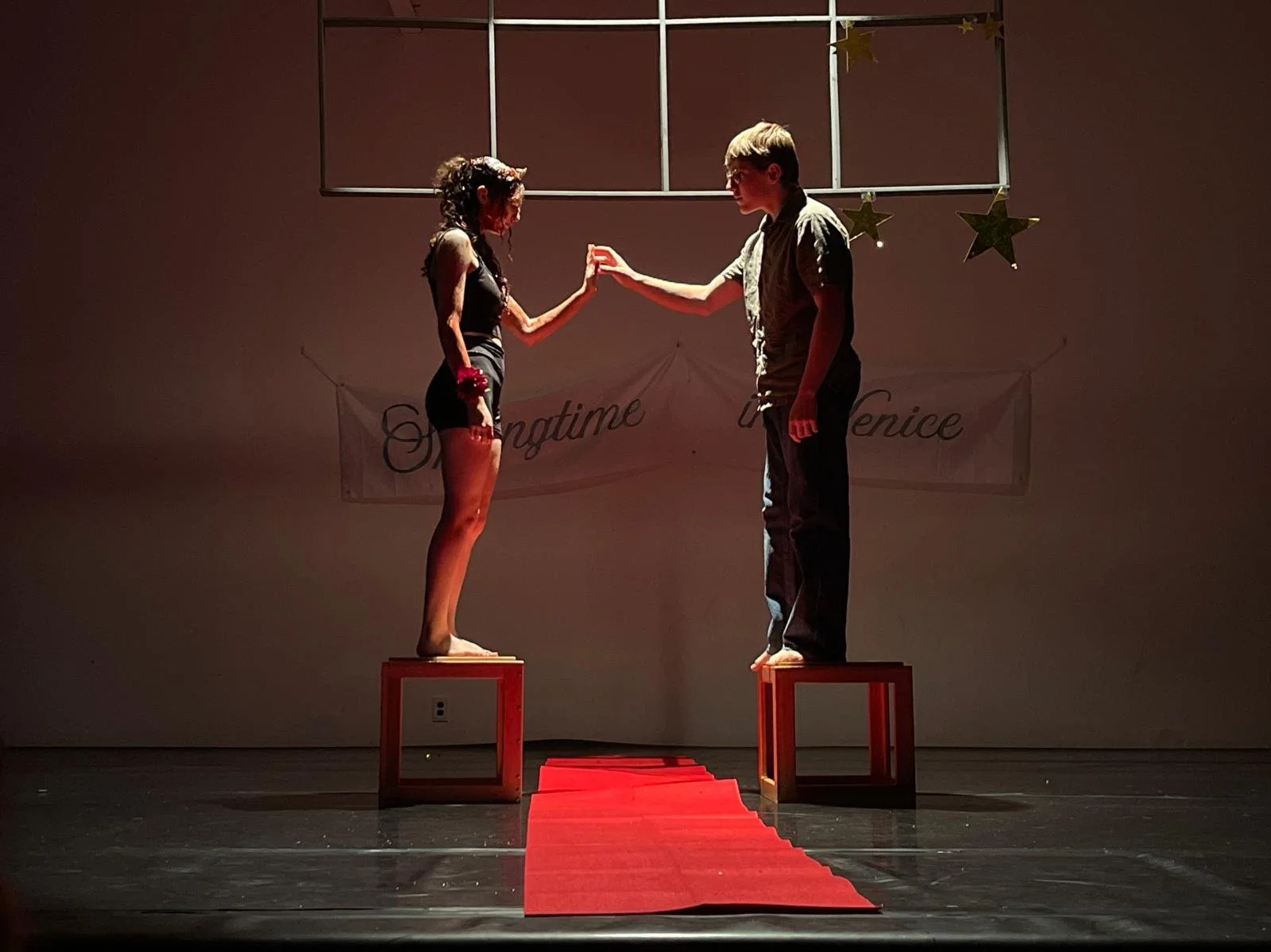
Two advanced PACK students reflect humanity back to one another in Stephen King’s CARRIE. May, 2026. Photo by Kat Caro.
A saying you’ll often hear in my classroom is “We are the HUMANS”—a reminder for all that it’s ok to make mistakes.
Humans are imperfect by nature; messy, complicated, sensitive, emboldened, weak, afraid, forgetful, sad, jealous, or any other adjective you could swap in. We feel everything, and we should. That’s the beauty of being alive—we get to experience every emotion, every color in the crayon box.
You know who’s the perfect example of a brutally imperfect person?
Me.
Yours truly.
Moi.
I call a student by the wrong name at least twice a day. I forget choreography in the middle of teaching it. I make on-the-spot, impulsive decisions that I later regret. My website crashes. I write a meeting date on the wrong day in my calendar. I push boundaries, I sing the wrong lyrics, I try so hard to be good at so many things, but I inevitably fail over and over again. Rinse and repeat.
However, something I’ve been thinking about a lot over the past several years is how important it is for me to model the release of perfectionism to my students. We’ve got to let it go, leave it, move on. Otherwise, we’re living in a constant state of disappointment in ourselves because “perfect” is not possible for us humans.
As theatre artists, we work hard at hitting the marks in perfect timing; we want perfect cadence for the project. We memorize text, lyrics, staging, cues, choreography, and we try to nail it just right in rehearsals and especially in front of an audience. But the truth is, no matter how hard theatre artists try, they will never get a show 100% as perfect as we imagined it. We can come close, we’ll always try, but we have to release mistakes, missed cues, forgotten blocking or lyrics or choreo, wrong costume or prop. We have to let the pressure of being perfect fall away. Because that’s actually the point of theatre.
If audiences wanted to see “perfect” they’d take themselves to the movies. Film has the luxury of editing, so movies are crafted to be exactly what the team wants the product to look like. Audiences come to the theatre to see humanity in all its grossness, rawness, ugliness reflected back at them because that’s where true connection and community is made. People need to see themselves in the work, and audiences and theatre-makers are bonded together in an acceptance of each other’s humanity. There’s a vulnerability in saying to an audience, “Here I am. Accept me in this moment as I try my best.” And, as we all know, vulnerability shows strength, and leads to respect. That’s the recipe for true artistry: try over and over again, even if you fail, and let others witness your work.
In today’s A.I. generated world of quick, easy “art” made by data, theatre is more important than ever. Performance is a pure human expression; untamed, raw, always imperfect. Theatre showcases truth: being alive is hard, but it’s beautiful, so we keep going.
We, as theatre-makers, want to offer ourselves grace, love and kindness in the wake of making mistakes so that we don’t burn out trying to grasp something impossible. The world needs our art, so let’s make it and enjoy the process of trying, messing up, but brushing ourselves off and continuing the journey and love of crafting.
