

Push Past Fear
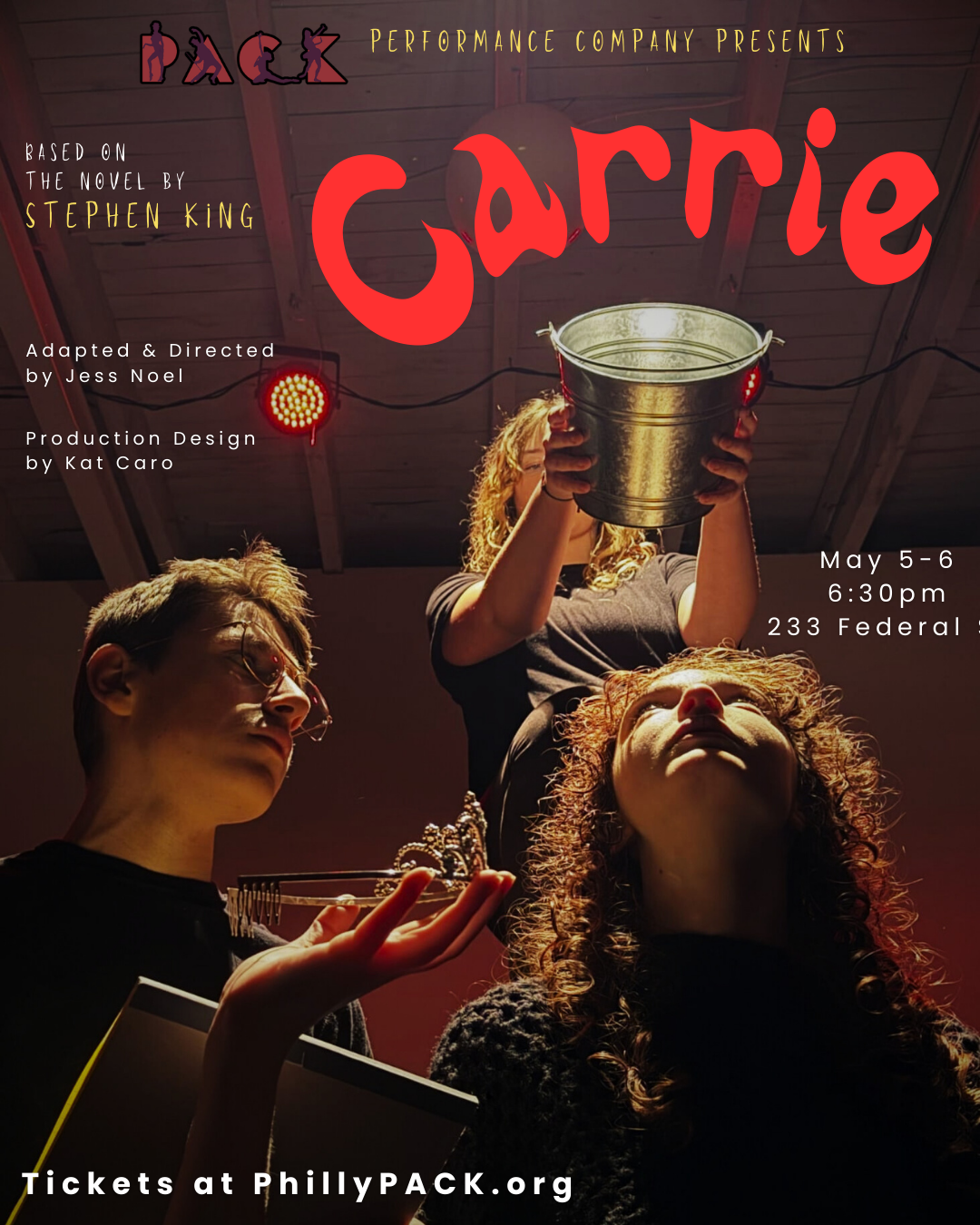
Production image for PACK’s upcoming CARRIE adapted & directed by Jess Noel, set for production May 5-6.
Theatre Training As Confidence-Building
Theatre, by default, is cringey. Audiences watch vulnerable actors reflect the messiness of humanity back to them, all while under bright stage lights. I would argue the more vulnerable the performance, the more impactful the experience is for the audience. But this vulnerability can be embarrassing for actors.
How do we empower young artists to take vulnerable risks on stage? What is the pay-off? And why should actors push through the discomfort of embarrassment?
The best part of any story is the tension—the moments in a play when the action shifts from “fine” to “problematic” to “chaotic.” As the action unravels on stage, the audience is faced with the project’s dilemma, and they begin to ask, “how would I get myself out of this?” Through this questioning, the impact of the play begins to take root in the viewer.
Whether the audience agrees with the characters’ journey or not, it doesn’t matter. The fact that the play is engaging their critical-thinking is the whole point, and why theatre is so important in the first place—audiences see themselves in the scenes, and they think constructively about the story and the characters’ motives. Ultimately, audience’s engagement leads to the development of empathy.
In order for the play to enlist the viewer’s sympathy, actors must authentically represent the imperfect, often-messy experiences of being human. If the play is too shiny, too fluffy, or too perfect, the opportunity for the audience to draw real-world connections is lost. What a waste of time—for both the audience and the actors! I’ve sat through many shows where actors ask very little of themselves and of the audience, and I always leave the theatre questioning what was the point of that piece? This is not the question we want the viewers to ask themselves. Rather, we want them to understand the point of the play, but debate the characters’ journey.
In service of the audiences’ experience, as well as their own discovery, actors must push past embarrassment. This begins in the rehearsal room where artists discover how to translate the tension from the page into real-life, tangible scene work.
Here’s an example of tension in a script (from my adaptation of Stephen King’s CARRIE):
CHRIS pulls the rope. A bucket tips over and spills onto CARRIE. Red blood covers her dress, hair and face. It splatters onto everything.
The crowd is silent. Then we hear one giant gawk from CHRIS. Then from Billy. Then the entire gym peels into laughter. Students point at CARRIE. They begin a chant:
ENSEMBLE
SCARY CARRIE! SCARY CARRIE! SCARY CARRIE!
ANNIE
It’s blood!
BECKY
Oh my god! (Becky screams)
Not only do we see Carrie’s vulnerability while she’s standing on the prom podium covered in a blood-soaked gown, but we also see vulnerability in Chris’ surprise to the horror she inflicted, as well as the shock as it registers slowly on other characters—Annie, Becky, Billy and the ensemble all portray experiencing Carrie’s mistreatment for the first time.
The audience, in this moment, is faced with the central question of the play: does the trauma and horror inflicted on Carrie justify her vengeance? Without a blood-soaked actor, and an ensemble acting out cruelty and unsympathetic callousness, we do not arrive at the audience’s main challenge. Strong choices from unafraid actors are required to enlist the next-level responses to the work.
Empowering young actors to feel confident enough to “go there” with regards to vulnerability on stage requires a certain sensitivity from the director. When the director understands the dynamics of the scene, and helps the actors grasp the larger significance of what emotions the scene will bring forth from the audience, actors are empowered to take the leap. The artist’s pay-off is the audience’s emotional reaction.
For example, the actor playing Carrie knows that she will be standing on stage covered in blood. But she also understands that if she is not blood-soaked, the audience will have no reason to debate her next moves. In fact, if the actor is not willing to be covered in blood, the story will have to move in a different direction altogether, because the central question no longer exists. There’s no reason for Carrie to take revenge on the tormentors if there’s no climactic torment.
The power of the story and the audiences’ experience lies in the hands of the artists, and this power emboldens actors to be fearless. They confidently know that their bravery will ignite the brains of every viewer in the room. What is more powerful than that realization?
Once young actors grasp the power and might in their vulnerability, they can enthusiastically push past embarrassment—on the other side of cringe lies discovery for the audience and for themselves. Actors and audiences learn new things about being human, and artists who engage in vulnerable, embarrassing, brave choices on stage will feel the effects of this practiced confidence in other parts of their lives.
A former student once said to me, “I’m not afraid to give presentations at school, or stand up and call attention to myself in group settings. I never feel embarrassed, but even if I do, I pretend like I don’t. The audience never knows that on the inside I feel shy—I appear really confident. This is because of my performance training.”
Pretending like you’re not embarrassed when maybe you are is a super power. It’s magic. This is the gift that theatre gives young people. When artists learn to present confidence, even if maybe they don’t feel confident, they discover the world will follow them into believing whatever they’re presenting. Imposter syndrome erodes because confidence is a huge part of success in leadership. This confidence is built and practiced in the performance classroom where students can rehearse vulnerability in a safe, supportive container; amongst peers who value bravery for the sake of discovery.
The result of risk-taking in performance is belief in one’s self—one’s artistry, leadership, and abilities. Therefore, embrace cringe! The discovery on the other side leads to the magic super power: others will follow you.
