

Simulating audience
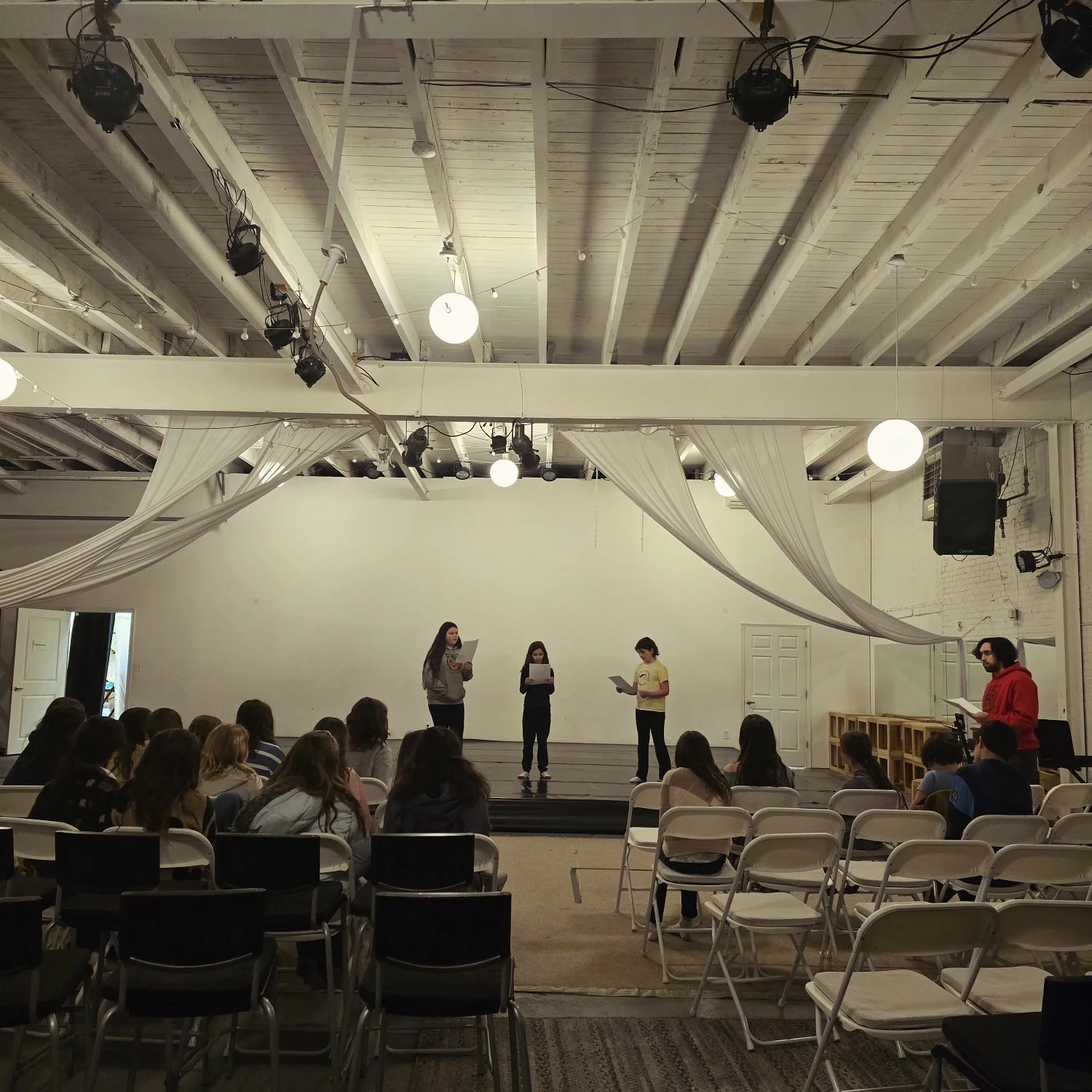
Students engage in performance simulation at Philly PACK, 2026.
Simulating Performance: establishing trust in rehearsal, aka “The Container”
In the rehearsal classroom, educational theatre-makers are simulating performance—some students are engaged in the scene work, while others are acting as witnesses from the audience. As I’ve previously discussed, this witnessing is derived from Mary Overlie’s Six Viewpoints, and it’s an important part in the development of the scene because the witnesses help confirm that the piece is working.
There’s another important lesson in simulating performance: the witnesses are creating a safe, supportive container for the actors to engage in risk-taking and experimenting. It’s a way for the ensemble to work as a team, show each other care and compassion, and offer each other respect. The container is the magic sweet spot where empathy-training occurs.
Theatre is not only about learning to successfully communicate, but it’s also about gifting each other with respect. This gift is sacred, important and rare in so many parts of daily life. In the theatre classroom, freely offering respect to one another is a way of showing love and friendship. This is a powerful practice that establishes trust between artists, solidifies life-long friendships, and bleeds out into the rest of the artist’s everyday life. Knowing that you’re a trusted storyteller leads to confident, happy, artistic futures.
But how to we get young people to respectfully engage in performance simulation when there’s so much to distract them?
No phones. This is a no-brainer, but I often need to remind students of this one. Once, a student snuck a phone into my rehearsal and filmed two students engaged in a romantic scene. Then he showed the video at school to peers outside of the rehearsal classroom. This was a blatant breech of trust, and ultimately I had to involve parents. The student was remorseful—he apologized to those he filmed, and all three students went on to participate in what was ultimately a very successful project.
Chat Cafe: I’ve started designating a separate classroom for students who want to chat. In my experience thus far, I’ve discovered students actually want to be in the rehearsal room witnessing the work. Having an option and reminding them that they are engaging in a choice to stay and respectfully watch from the audience is effective in reigning in side conversations.
Opportunity to offer feedback. If the students witnessing the work are presented with the opportunity to offer constructive feedback, it gives them a sense of contribution and purpose. I like to prompt students by asking, “What did you see that was effective?” or “what did you see that was unclear?”
Faculty models The Container. I ask all faculty in the rehearsal room to model the locked-in respect that is expected from the students. As I always tell my team, sometimes our job is just watching. This models professional rehearsal etiquette.
When the rehearsal classroom is fully engaged in a respectful performance simulation, the practice allows us to make vulnerable, intimate work in a short amount of time. The payoffs are beautiful projects that inspire audiences and ensemble, as well as life-long relationships built on trust.
