

The VALUE of Practicum
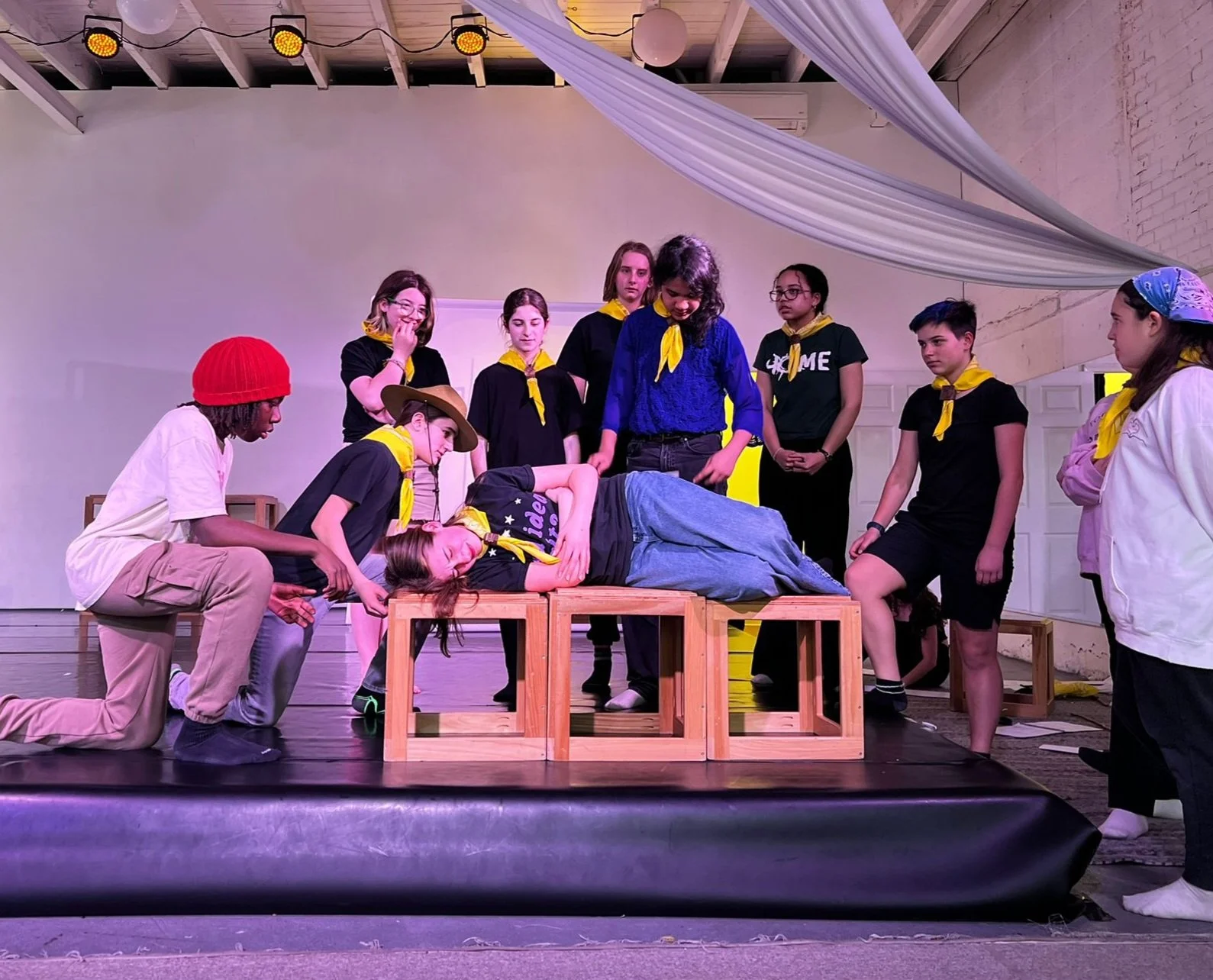
Teen students in rehearsal at Philly PACK, 2024.
Curriculum as a Practicum: gaining experience beyond the classroom
Training young theatre-makers starts in the classroom that doubles as a rehearsal room. Applying theory in a real-world rehearsal is the best way to gain experience and growth for future actors, directors, choreographers, stage managers and designers. Students need a space to practice their technique, and the best place for this is the rehearsal room where we can simulate performance. When students have the opportunity to apply their technique towards an end-goal (performance), the curriculum is further connected to tangible experience. Well-trained artists trusted with real-world applications of the curriculum—practicum—will carry the technique and practices with them into future auditions, rehearsals and job interviews because they feel confident and successful in their tried-and-true skills.
The Eight Tenets of PACK
Principles / techniques that make up the performance education practicum at Philly PACK:
1. Ensemble (teamwork!) — Above all, theatre is a team-building art form. We work together to progress the storytelling. We are a community that serves and looks out for every individual member. The stronger our parts are, the stronger our shows are. We treat each other with respect, love and empathy. We value the strengths of every player, designer, crew member, and we value the audience for their partnership in the storytelling exchange of energy.
2. Vocalization (project!) — One of our central focuses in storytelling is vocal projection. If the audience cannot hear what we’re saying, the story halts. We must breathe deep and squeeze our stomach muscles to get full sound out. We value quality vocal projection that sounds comfortable to audience (screaming is painful for the actor and audience’s experience). We vocally warm up before performance, we value diction and annunciation, and we value vocal choices like regional accents for characterization.
3. Physical Choices — Another central focus in storytelling is complete embodiment of character with use of physical personhood. Character extends through toes and fingertips, top of head, heart/chest, shoulders, chin, neck and levels (knees). How does this character stand? Walk? Run? Dance? How does this character take up space? Every gesture and position of physical being should be intentional and informed from character.
4. Facial Expressions — One of the best communication tools we have for stage (and life!) is facial expression. The face tells the audience so much about the characters’ moods. We use expression of the eyes and eyebrows, mouth, and the tilt of chin to say how our character is feeling. Sleepy, sad, mad, frustrated, scared, annoyed, happy, excited, anxious, surprised, alert, confused, and any feeling humans can feel!
5. Script Analysis — Context: what time is the play set in? What time was the play written? Who wrote the play? Why did they write it? Who is my character? Why do they say this line? How do they say it? Who are they talking to? How does the character feel about this scene/scene partner? Also: we value toting script home and back to rehearsal every time, and we value memorization of lines and lyrics and blocking in a timely manner to allow optimal rehearsal time for off book character development.
6. Character Development — Each actor combines vocalization, physical choices, facial expressions, and script analysis to develop their characters in full. We value homework! Thought must be applied at home, so that actors/performers can bring ideas into the rehearsal process: we value trying choices out in rehearsal. Be brave, make BIG choices, and trust yourself and your team. We work together to create dynamics between characters that help the progression of the story.
7. Respectful of Design — If it’s not your prop, don’t touch it. We respect and love each part of the design. We know that love and thought went into each design: props, costume pieces, backdrop, set pieces, programs, lighting, sound design, house design, etc. We treat designs with care and we treat designers with respect because THEY WORK HARD for the good of the show. We know that if a prop, costume piece or any component of the design gets broken or lost, someone has to re-make it or fix it.
8. Lock the Blocks! This is a metaphor for safety at all times. Our top priority at PACK is safety. We look out for each other, we lock the rehearsal cubes (blocks), and we are aware of personal space and boundaries in the rehearsal/production process. PACK students must always conduct themselves in a safe manner that protects themselves and each other. We love each other and we want to keep every one safe.
