

Social Reform Theatre for Young Artists
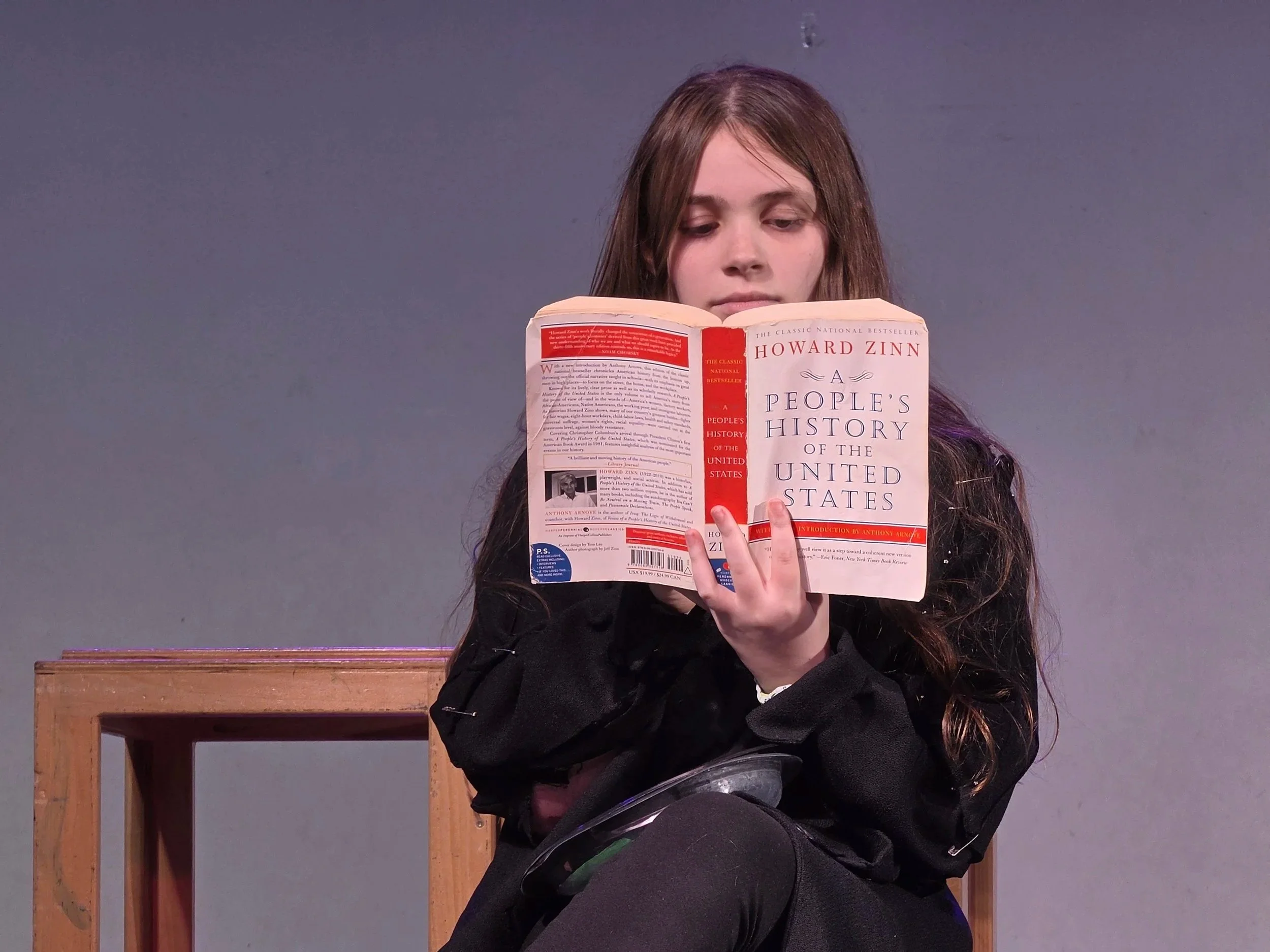
Young artist as “MISSY” from PACK’s Summer Production Intensive 2026: Bill & Ted’s Excellent Adventure.
MISSY, or: Social Reform Theatre for young artists
In college, I had the eye-opening honor of studying some of the great Social Reform Theatre-makers. My professors were extreme disciples of Bertolt Brecht, so it’s no surprise to anyone (especially my former classmates) that I make socio-political theatre with young people. This was also engrained in me from an earlier age, when the artistic director of the community theatre in my small West Texas town introduced me to The Who’s Tommy and Arthur Miller’s Death of A Salesman. I understood, even as a middle schooler, that theatre could be used as a conduit for change.
Some may say children don’t belong in politics. I couldn’t disagree more. Young people are highly aware of what’s going on in America today; they live in our polarized political climate, and they deserve a platform for expression like any artist.
Drawing the dotted lines between art-making and activism is one of the main reasons I teach. And, if I’m being completely authentic, I believe any theatre made today that isn’t pushing against the current oppressive political systems is bordering on state-sanctioned propaganda. 2026 is not pretty, it’s not fine or happy, so art that says otherwise seems out-of-touch and pointless.
Brecht wrote plays that pushed back against Hilter, Luis Valdez wrote for Teatro Campesino that used theatre as a voice for the migrant farm workers in 1965 California, and Theatre of the Oppressed from the 1970s, spearheaded by Augusto Boal, created performance opportunities where New York audiences became the actors, resembling a protest. When I look at photos from Theatre of The Oppressed, I'm reminded of images of the streets of Minneapolis from only a few short months ago. These are three examples from a long list of theatre-makers who use the art form as opportunities to speak out against regimes that seek to silence every day people.
In my classroom, this looks like introducing students to writers on the 2026 Banned Books lists. It looks like incorporating protest music from the past, along with context for why these songs were written. My curriculum also looks like organizing field trips to The Wilma Theatre to see James Ijames’ The Most Spectacularly Lamentable Trial of Miz Martha Washington. I feel a deep responsibility to show my students what theatre can be: a tool for change.
A recent example of exposing students to social reform theatre was in my adaptation of Bill & Ted’s Excellent Adventure. The goal of the two-week summer intensive was to celebrate these fun, fabulous characters, and retain some of the original themes, while also showcasing how to re-write problematic, dated plot points from 1988 that no longer serve audiences in 2026. Puzzle-piecing old screenplays into contemporary theatre projects is an exciting exercise I’ve used for several years, and it leaves lasting impressions on students.
One of the main problems in the original screenplay was Bill’s stepmom, Missy. I don’t actually want to divulge the details of her character here because you can research that for yourself (the original film is free on Youtube), but I do want to discuss how Missy became a driving example of our adaptation’s main theme: We can’t change history, but we can view it through a fresh lens, and learn from it.
Our Missy became a Howard Zinn-reading, whimisical goth-punk anarchist who dwelled in this fictitious crossover plane that I’m not sure exists anywhere else outside of my head: a 1980s anti-establishment Stevie Nicks fan. Missy loved Stevie Nicks, and her clad-in-black friends did too.
In the rehearsal-classroom, this scene allowed students to study Nick’s song Edge of Seventeen, and the context for why Stevie Nicks wrote the song in the first place; her lyrics were a response to John Lennon's assassination. He died the week she wrote the song. Essentially, Edge of Seventeen is a protest song exploring grief for a young life taken too soon. And our Missy loves nothing more than an opportunity to spout protest rhetoric.
Here’s her scene:
BILL and TED carry huge stacks of books out to meet BILL’s stepmom, MISSY, picking them up from school.
TED
Well, then. Who was Noah’s wife?
BILL
I don’t know, dude. But we’re in big trouble. We are seriously flunking, dude. Listen to this (reads from paper) “How would an important historical figure from each of your time periods view the world of San Dimas, 1988?”
MISSY is really goth and witchy, and she’s kinda scary. She wears heavy black eyeliner and black driving gloves. STEVIE NICKS EDGE OF SEVENTEEN is blaring out her car window.
TED
Bill, your stepmom is so scary.
BILL
I know, dude. Don’t make any sudden movements.
MISSY
Get in. Hurry! We’re picking up some of my friends.
BILL and TED (look at each other fearfully)
Friends?!
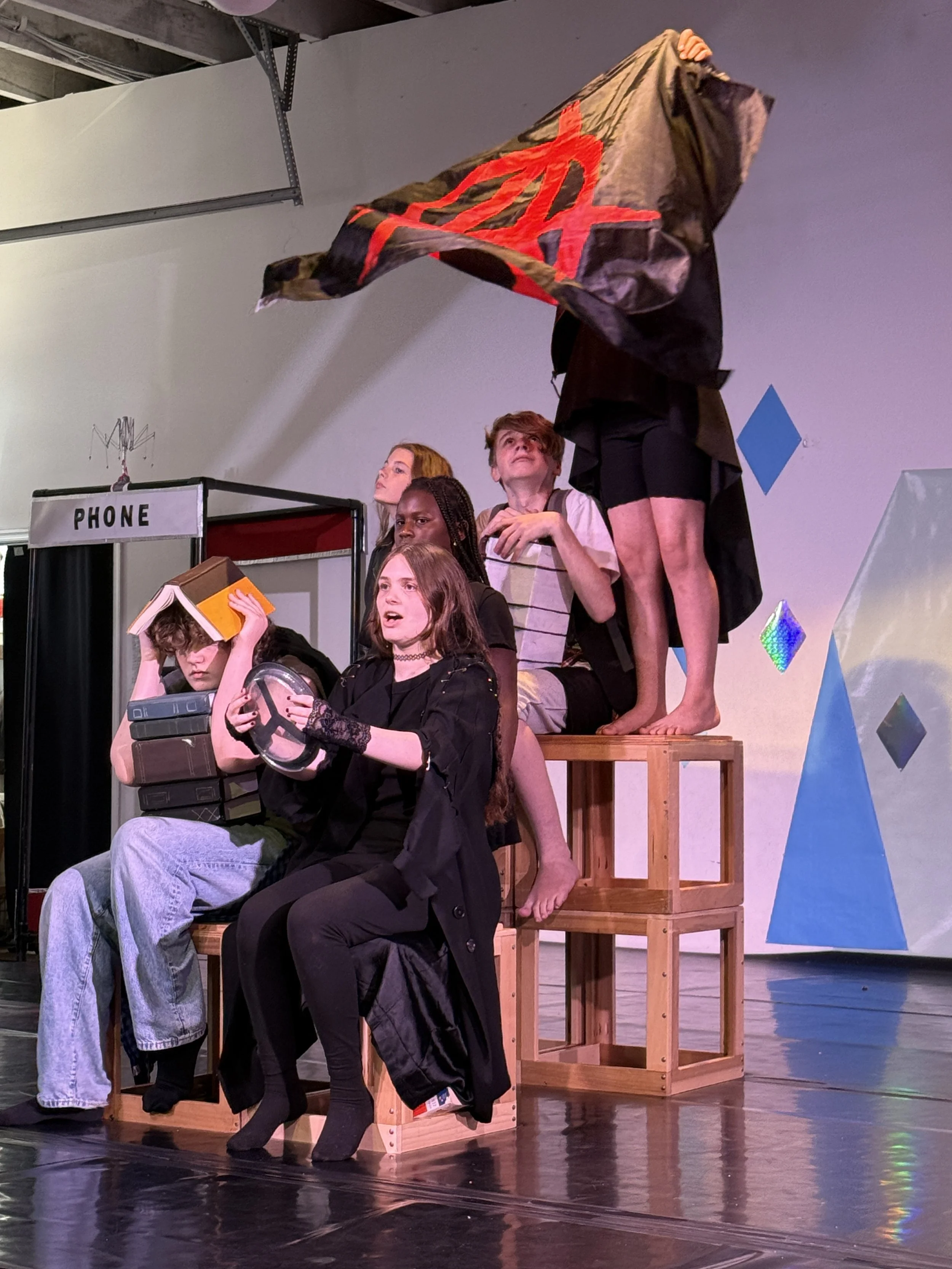
Missy & Friends, Philly PACK, 2026. Bill & Ted’s Excellent Adventure photo by Jonathan Kerrs.
Just like the white winged dove
Sings a song, sounds like she's singin'
"Ooh, ooh, ooh"
Just like the white winged dove
Sings a song, sounds like she's singin'
"Ooh, baby, ooh, said, ooh"
And the days go by like a strand in the wind
In the web that is my own, I begin again
Said to my friend (everything's not)
"Baby, nothin' else mattered"
He was no more (he was no more)
Than a baby then
Well, he seemed broken-hearted
Something within him
But the moment that I first laid
Eyes on him
All alone, on the edge of 17
Just like the white winged dove (just like the white winged dove)
Sings a song, sounds like she's singing
"Ooh, baby, ooh, said, ooh"
Just like the white winged dove
Sings a song, sounds like she's singin', said
"Ooh, baby, ooh, said ooh"
As the song progresses, the car gets more and more crowded with MISSY’s scary goth friends. BILL and TED just try to stay quiet and motionless. One of her friends flies an anarchist’s flag.
BILL
Missy, uh, I mean Mom. Can you take us to Ted’s house?
MISSY
Sure. What are you boys up to today?
TED
History report.
MISSY
History! Ha! What kind of history are they teaching you at that school? The people’s history?
MISSY’S FRIEND 1
I doubt it.
MISSY’S FRIEND 2
You learning about Howard Zinn? (Laughs)
MISSY’S FRIEND 3
Yeah right. Remember what they taught us when we were in high school? It hasn’t changed much.
MISSY
Are they teaching you about American history, huh?
BILL AND TED
Uh——
MISSY (getting angrier)
How this land was stolen from one people, and built up on the backs of another slave people, brought over here in chains. Huh? Is that what you’re learning about, boys?
BILL and TED
Uh…(beat)
MISSY’s FRIEND 1
Leave em alone, Missy. They’re just kids.
BILL AND TED
Thanks for the ride!
MISSY
Any time, kids. Any time.
BILL and TED watch MISSY and her FRIENDS exit while cackling and hollering like a bunch of anti-establishment punks…
TED
Dude! Your step mom is so——
BILL
Scary, yeah I know, dude.
TED
I was gonna say kinda cute.
BILL (hits TED)
Shut up, Ted!
TED
Sorry, dude. But it’s true.
BILL
Shut up!
Here’s to teachers, creators and students pushing as far as audiences will let us go. In my experience, today’s audiences are game for all of it. And for this, I’m forever grateful!
